South Africa is leading the way as Africa is poised to make history at the 2026 FIFA World Cup with an unprecedented ten teams representing the continent, marking its largest presence ever at the tournament.
Kicking off in North America, South Africa will face co-hosts Mexico in the opening match. This is the first time African teams will have double-digit representation on football’s biggest stage.
The teams representing Africa will be Algeria, Cape Verde, Côte d’Ivoire, DR Congo, Egypt, Ghana, Morocco, Senegal, South Africa, and Tunisia. This milestone follows Morocco’s impressive journey to the semi-finals at Qatar 2022, which changed global perceptions of African teams.
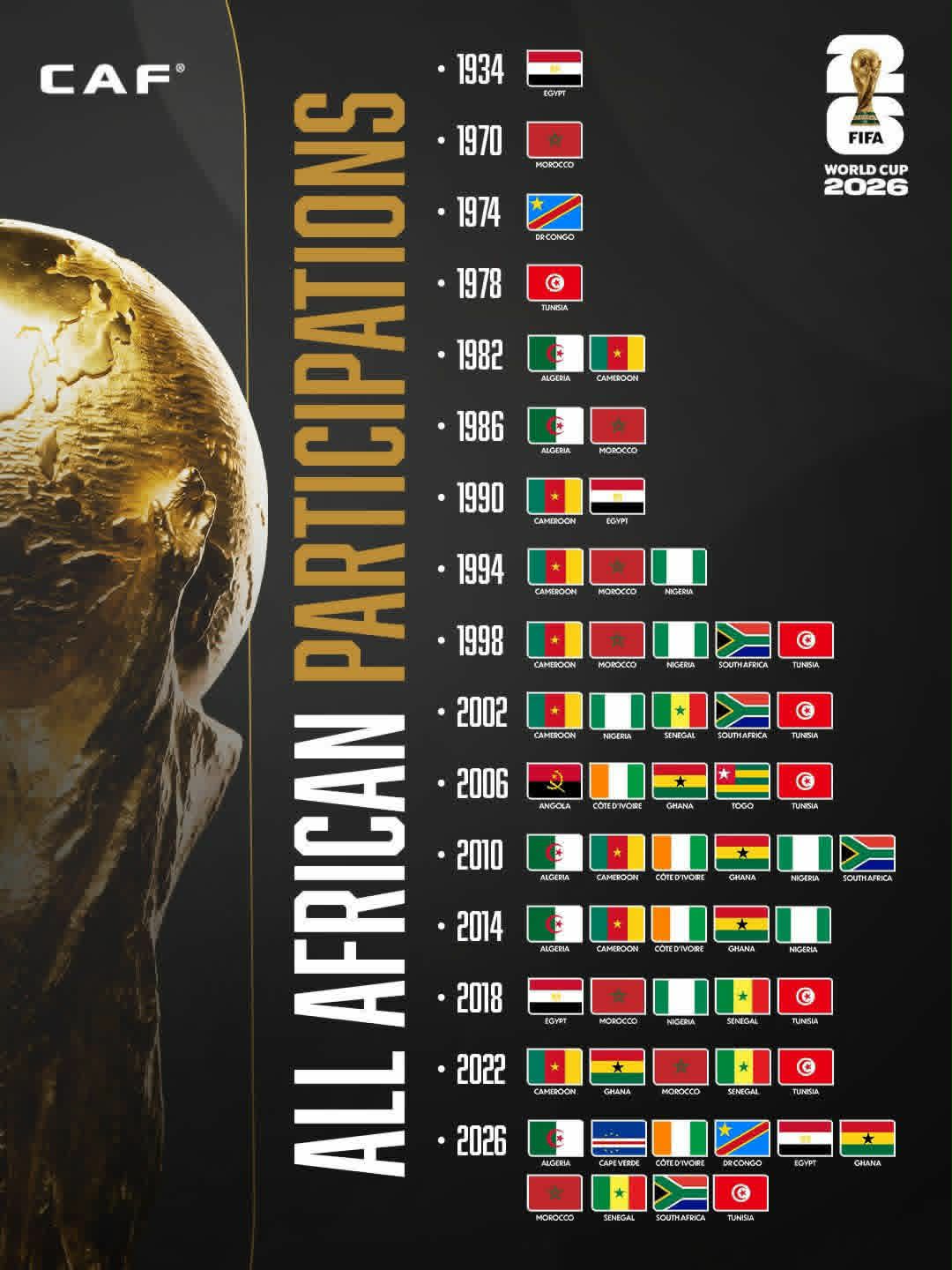
Africa’s World Cup journey began in 1934 with Egypt’s participation. Over the decades, representation gradually grew, with Morocco, DR Congo, and Tunisia among the first to join.
The milestone of five African teams was first achieved in 1998, and the previous record of six was set in 2010 when Ghana reached the quarter-finals.
Cape Verde’s qualification is particularly notable, as it marks their first World Cup appearance. DR Congo’s return since 1974 and South Africa’s comeback after 2010 add further excitement.
Veteran teams like Ghana, Senegal, Morocco, Tunisia, Algeria, Egypt, and Côte d’Ivoire bring valuable experience, while newcomers inject fresh energy into Africa’s challenge.
The 2026 World Cup isn’t just about numbers; it’s about turning this historic representation into record-breaking performances. With higher expectations, Africa arrives in North America with its strongest presence yet.
The journey from Egypt’s debut in 1934 to ten teams in 2026 has been long and challenging, marking a significant moment for African football and its growing ambition on the world stage.
African participation at the FIFA World Cup
1934: Egypt
1970: Morocco
1974: DR Congo
1978: Tunisia
1982: Algeria, Cameroon
1986: Algeria, Morocco
1990: Cameroon, Egypt
1994: Cameroon, Morocco, Nigeria
1998: Cameroon, Morocco, Nigeria, South Africa, Tunisia
2002: Cameroon, Nigeria, Senegal, South Africa, Tunisia
2006: Angola, Côte d’Ivoire, Ghana, Togo, Tunisia
2010: Algeria, Cameroon, Côte d’Ivoire, Ghana, Nigeria, South Africa
2014: Algeria, Cameroon, Côte d’Ivoire, Ghana, Nigeria
2018: Egypt, Morocco, Nigeria, Senegal, Tunisia
2022: Cameroon, Ghana, Morocco, Senegal, Tunisia
2026: Algeria, Cape Verde, Côte d’Ivoire, DR Congo, Egypt, Ghana, Morocco, Senegal, South Africa, Tunisia